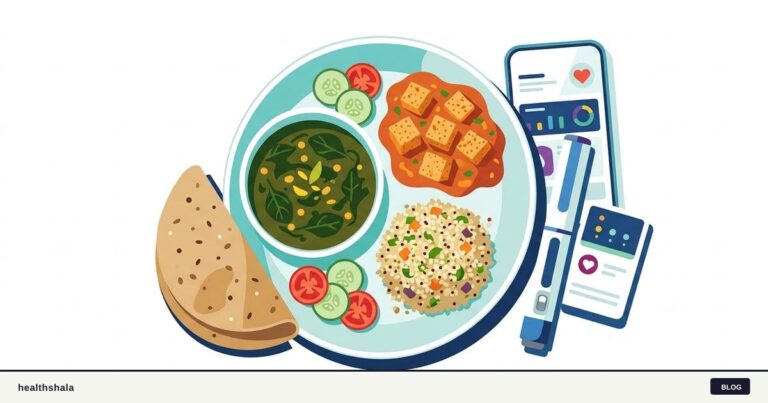
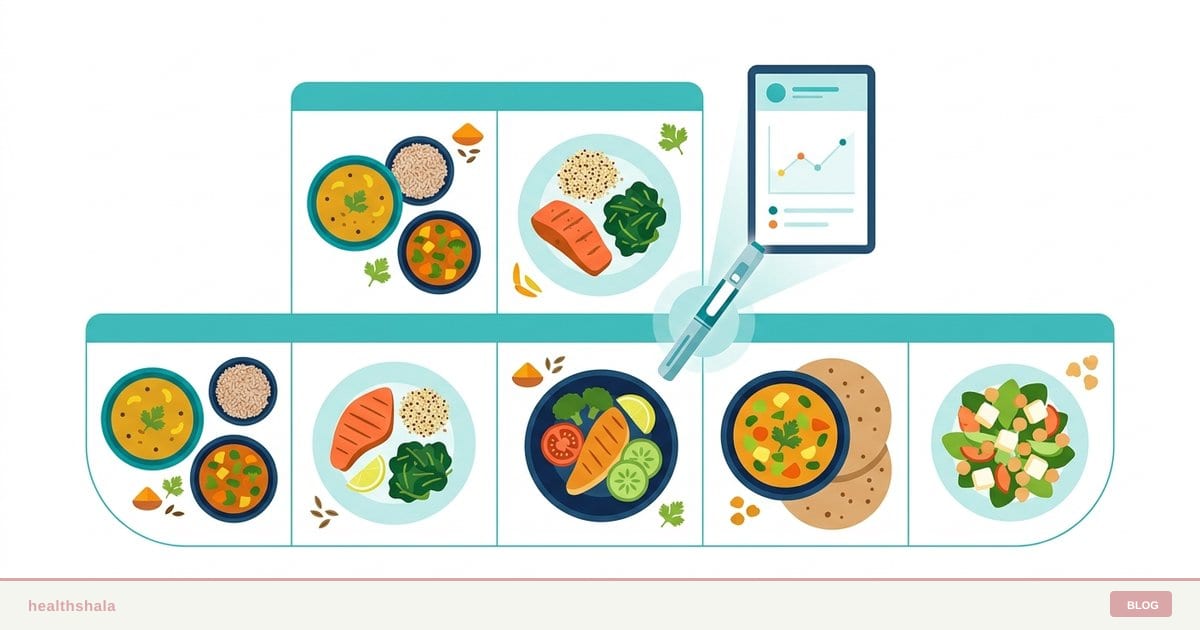
The 7-Day Indian Meal Plan for Ozempic That Actually Protects Your Muscle
Most Indian users on Ozempic eat too little protein by accident. They lose 8-10kg in 12 weeks but look deflated instead of fit because the drug killed their appetite so effectively they’re surviving on khichdi and toast. while their muscle breaks down faster than fat.
A 7-day Indian meal plan for Ozempic must deliver 80-100g protein daily using real portions. 2 katori dal, 1 serving paneer, 1 cup dahi. while managing nausea with small, frequent meals. This plan translates “high protein” into dal-roti-sabzi combinations that protect muscle during GLP-1 weight loss, using IFCT 2017 data for portion accuracy Indians can actually cook and measure.
Why Generic Meal Plans Fail Indian Ozempic Users
The problem isn’t willpower.
It’s that every American GLP-1 meal plan says “eat 100g protein” but your nausea makes chicken breast smell like poison. Every Indian diet plan for “weight loss” counts calories, not muscle protection. And your endocrinologist spent 8 minutes explaining injection technique, zero minutes on what to actually eat when you’re too nauseous to open the fridge.
Research shows that Ozempic users need 80-120g protein daily to prevent muscle loss during rapid weight reduction. But standard Indian vegetarian meals deliver only 40-50g protein per day. The gap isn’t closed by “eating healthy”. it’s closed by knowing that 1 katori rajma has 12g protein while 1 katori rice has 3g, and structuring every meal around that math.
Most meal plans treat GLP-1 users like regular dieters. They’re not.
Regular dieters are hungry and need volume. Ozempic users are nauseous and need strategic density. They can’t stomach 3 full meals but they can manage 5 small portions if someone tells them exactly what those portions should be. Healthshala’s approach translates Western protein targets into Indian food portions your cook already makes. because the real challenge isn’t what to eat, it’s how to measure it when you’re too sick to Google “moong dal protein content” for the tenth time.
The 7-Day Muscle-Protective Meal Plan
This plan assumes moderate nausea, typical for weeks 2-8 of Ozempic use.
Each day delivers 85-95g protein using common North Indian ingredients. Portions are given in katori (standard 150ml serving bowl), pieces, and servings. never grams or ounces. Every meal includes a nausea management note because ideal nutrition means nothing if you can’t keep it down.
Day 1: Dal-Heavy Foundation
- Early morning (7am): 1 glass warm water with lemon. Wait 20 minutes before eating.
- Breakfast (8am): 2 small moong dal cheela + 1 cup plain dahi + 5 almonds. Protein: 22g. Nausea tip: eat the cheela room temperature, not hot.
- Mid-morning (11am): 1 small bowl sliced papaya + 6 cashews. Protein: 4g.
- Lunch (1:30pm): 1.5 katori masoor dal + 1 small roti + 1 katori palak sabzi + cucumber raita (½ katori). Protein: 26g. Nausea tip: eat dal first when appetite is strongest.
- Evening (5pm): 1 cup chai + 2 boiled eggs (whites only if nauseous) OR 3 tbsp roasted chana. Protein: 12g.
- Dinner (8pm): 2 katori rajma + 1 small roti + mixed veg salad. Protein: 24g. Nausea tip: skip the roti if feeling full, prioritize the rajma.
Total protein: 88g. Daily fluid target: 2-2.5 liters including dal water.
Day 2: Paneer-Centric
- Breakfast: 1 bowl upma (sooji with vegetables) + 1 cup buttermilk. Protein: 18g.
- Mid-morning: 1 small apple + 8 almonds. Protein: 5g.
- Lunch: 1 katori chana dal + 2 pieces grilled paneer (50g total) + 1 katori lauki sabzi + 1 small roti. Protein: 30g.
- Evening: 1 cup masala chai + 1 small bowl makhana (roasted, not fried). Protein: 6g.
- Dinner: Paneer bhurji (100g paneer) + 1 small roti + tomato-onion salad. Protein: 28g. Nausea tip: bhurji texture is easier than chunks when nauseous.
Total protein: 87g. Note: Paneer is calorie-dense. If weight loss stalls, replace evening makhana with herbal tea only.
Day 3: Mixed Pulse Day
- Breakfast: 2 idli + 1 katori sambar + 1 tbsp coconut chutney. Protein: 20g.
- Mid-morning: 1 small banana + 5 walnuts. Protein: 4g.
- Lunch: 1 katori mixed dal (moong + masoor) + 1 katori baingan bharta + 1 small roti + green salad. Protein: 24g.
- Evening: 1 cup green tea + 2 tbsp roasted chana dal. Protein: 8g.
- Dinner: 1.5 katori chole + ½ katori brown rice + cucumber-tomato salad. Protein: 26g. Nausea tip: mash chole slightly if texture triggers nausea.
Total protein: 82g. This is the minimum safe threshold. If dinner feels too heavy, eat full lunch and split dinner into two smaller meals.
The difference between losing 10kg of “weight” and losing 7kg fat + 3kg muscle is what you eat on your worst nausea days. Not your best days. Your worst ones.
Day 4: High-Dahi Strategy
- Breakfast: 1 bowl oats (½ cup dry) cooked in milk + 5 almonds + 1 small banana sliced in. Protein: 20g.
- Mid-morning: 1 cup plain dahi (thick, not watery). Protein: 6g.
- Lunch: 1 katori arhar dal + 1 katori soya chunks curry (dry preparation) + 1 small roti + raita. Protein: 32g. Nausea tip: soya can be heavy; reduce to ½ katori if needed.
- Evening: 1 cup buttermilk + 1 small bowl sprouted moong. Protein: 10g.
- Dinner: 1 katori kadhi (made with besan) + ½ katori rice + stir-fried bhindi. Protein: 18g.
Total protein: 86g. Dahi and buttermilk are easier on nausea than solid protein. Use this pattern on bad stomach days.
Day 5: Egg Option (for non-vegetarians)
- Breakfast: 2 boiled eggs + 1 small roti + ½ katori tomato sabzi. Protein: 18g.
- Mid-morning: 1 small orange + 6 cashews. Protein: 4g.
- Lunch: 1 katori rajma + 1 small roti + 1 katori mixed veg sabzi + salad. Protein: 24g.
- Evening: 1 cup chai + 1 egg bhurji (1 egg scrambled). Protein: 8g.
- Dinner: 1.5 katori moong dal khichdi (with ghee, not oil) + 1 katori dahi + papad. Protein: 26g. Nausea tip: khichdi is the ultimate bad-day meal. Protein comes from dal, comfort from rice.
Total protein: 80g. Eggs are the most bioavailable protein source. If nausea allows, this is the most muscle-protective day.
Day 6: Besan-Heavy Day
- Breakfast: 2 besan cheela (thicker than Day 1) + green chutney + 1 cup dahi. Protein: 24g.
- Mid-morning: 1 small pear + 5 almonds. Protein: 4g.
- Lunch: 1 katori chana dal + 1 katori tofu curry (100g tofu) + 1 small roti. Protein: 28g. (Vegetarian protein stacking.)
- Evening: 1 cup green tea + 2 tbsp roasted peanuts (unsalted). Protein: 7g.
- Dinner: Besan ka cheela pizza-style (topped with paneer + veggies, no roti needed) + side salad. Protein: 22g.
Total protein: 85g. Besan (chickpea flour) delivers protein without heaviness. Use this when solid dal feels too thick.
Day 7: Restaurant-Friendly Day
Real life includes eating out.
- Breakfast: 1 bowl poha (with peanuts) + 1 cup buttermilk. Protein: 16g.
- Mid-morning: 1 small apple + 1 tbsp peanut butter (natural, no sugar). Protein: 8g.
- Lunch (restaurant): 1 bowl dal makhani + 1 roti + paneer tikka (4-5 pieces, dry) + salad. Protein: 30g. Skip the butter naan.
- Evening: 1 cup masala chai + 6 almonds. Protein: 4g.
- Dinner: 1 katori rajma + ½ katori rice + cucumber raita. Protein: 22g.
Total protein: 80g. Restaurant meals are protein-possible if you order strategically. Dal + paneer + skip the carbs = muscle protected.
How to Measure Without Obsessing
You don’t need a food scale.
You need one tracking system that speaks in katori and servings, not grams. Studies on Indian meal planning show adherence drops 60% when users are asked to weigh food. Nobody measures 47g of paneer. They eat 2 pieces and wonder if it was enough.
Healthshala solves this by using IFCT 2017 data. the only Indian food database that knows 1 katori cooked moong dal = 150ml volume = 12g protein. You track portions, not nutrients. The app does the protein math invisibly and tells you one thing: is your muscle safe today, yes or no.
Three rules make this work:
- Track immediately after eating. Not at 11pm when you’re trying to remember if lunch had 1 or 1.5 katori dal.
- Your “katori” must be consistent. Use the same bowl every day. Doesn’t matter if it’s 130ml or 170ml. consistency matters more than precision.
- On bad nausea days, track what you attempt to eat, not what you finish. The goal is pattern awareness, not perfect data.
The metric that matters isn’t “did I hit 90g protein today”. it’s “did I protect my muscle 5 out of 7 days this week.” Ozempic works too well. You will have 2 days where you can barely eat. Those 2 days don’t erase the other 5.
What Changes After Week 4
Nausea typically peaks in weeks 2-4.
By week 8, most users report 60-70% reduction in side effects. This is when appetite suppression becomes the bigger challenge than nausea. You’re not sick. you’re just never hungry. And that’s when muscle loss accelerates if you’re not strategic.
After the first month, adjust the plan:
- Increase protein density, not volume. Go from 1.5 katori rajma to 1 katori rajma + 2 pieces paneer. Same fullness, more protein.
- Front-load protein at breakfast. Your appetite is strongest in the first 2 hours after waking. Eat 25-30g protein before 9am.
- Drop evening chai + snack if you’re never hungry for it. Replace with 1 scoop protein powder in water (unsweetened, unflavored) at 5pm. Liquid nutrition bypasses fullness cues.
The meal structure stays the same. The portions shrink. But the protein target doesn’t.
Research on South Asian meal patterns shows sustained adherence requires cultural food alignment. You can white-knuckle through 4 weeks of boiled chicken and broccoli. You can’t sustain it for 6 months. This plan works because it’s built on food you already cook, adjusted for the one variable that matters: muscle protection during pharmaceutical appetite suppression.
Track Your Muscle Protection Score in Real Indian Portions
Stop Googling “is 1 katori dal enough protein”. get a daily yes/no answer that actually accounts for dal-roti-sabzi.
Frequently Asked Questions
Can I follow this plan if I’m vegetarian?
Days 1-4 and 6-7 are fully vegetarian and still deliver 82-88g protein daily. Replace Day 5 eggs with 1 extra katori dal + 50g paneer across meals. The protein target drops to 78g but that’s sufficient if you’re under 75kg body weight.
What if I can’t eat the full portions due to nausea?
Prioritize protein-dense items first: dal over rice, paneer over roti, dahi over salad. Eat 60% of the dal portion, skip the carbs entirely. A partial high-protein meal beats a full low-protein meal. Track what you actually ate. don’t force-feed to hit a number. Two 70g protein days are better than one 90g day followed by complete meal skipping.
How do I know if I’m losing muscle or just fat?
Track strength, not just weight. Can you still climb 3 flights of stairs without getting winded? Pick up a 10kg bag of rice easily? If daily tasks feel harder despite losing weight, you’re losing muscle. Visual cue: if your clothes fit loose but you look “soft” or “deflated” rather than toned, protein intake is too low. Healthy fat loss shows in your face and waist first, not your arms and shoulders.
Should I take protein powder on Ozempic?
Only if you consistently can’t eat 80g protein from food for 3+ days in a row. Protein powder bypasses nausea but doesn’t teach sustainable eating patterns. If you use it, choose unflavored, unsweetened whey or pea protein. Add 1 scoop (20-25g protein) to morning dahi or evening buttermilk. Don’t replace meals with shakes. supplement the meals you can’t finish.
Can I eat out and still protect my muscle?
Yes. order dal makhani, paneer tikka (dry), or rajma with 1 roti. Skip biryani, naan, and fried starters. Restaurant dal portions are usually 1.5 katori minimum. Ask for extra paneer pieces. Protein in Indian restaurants is easy if you avoid the rice-heavy and bread-heavy traps. Day 7 of this plan is specifically designed for restaurant eating.
How long should I follow this exact plan?
Use this structure for weeks 2-8 of Ozempic when nausea is highest and meal planning is hardest. After week 8, keep the protein targets but rotate meals based on what you’re not sick of. The portions and protein distribution matter more than the specific dishes. Think of this as training wheels. once you internalize that 1 katori rajma = 20g protein, you can build your own days.