Indian Foods to Avoid on Wegovy: A Muscle-Safe Guide for Desi Dieters
Indian generic Wegovy costs ₹3,200 monthly while protecting muscle requires knowing exactly which desi foods sabotage the drug’s effectiveness. Most patients lose weight fast but don’t realize certain Indian staples. ghee-heavy parathas, sugary chai, masala-fried snacks. trigger the nausea that makes them skip protein meals, accelerating muscle loss instead of fat loss.
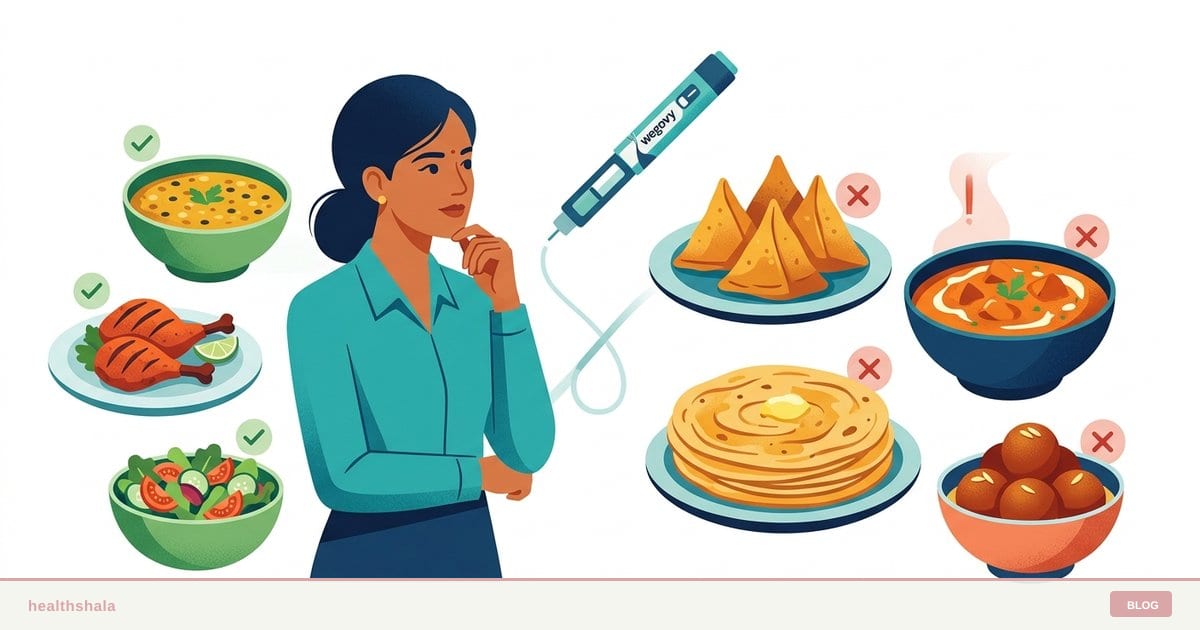
Avoid deep-fried foods (samosas, pakoras, bhaturas), ghee-heavy dishes (parathas with 3+ tbsp ghee, rich curries), high-sugar items (gulab jamun, jalebi, mithai), and spicy preparations (vindaloo, phaal-level dishes) on Wegovy. These worsen nausea and reflux, making it impossible to hit your protein minimum. the actual danger isn’t the calories, it’s that you’ll skip the dal-paneer meals your muscles need because you feel too sick to eat.
Why Indian Food Creates Unique Wegovy Challenges
Western Wegovy guides list “fried foods” and “fatty meals” as if that translates cleanly to Indian eating.
It doesn’t.
A plain dosa with sambhar is fine. A masala dosa made with 2 tablespoons of ghee and stuffed with spiced potato triggers 6 hours of nausea. The difference isn’t obvious from reading “avoid fried foods” on a Healthline listicle written for American readers eating chicken nuggets.
Standard GLP-1 dietary guidance warns against greasy burgers and pizza. Indian cooking uses ghee, butter, and oil differently. not as toppings but as cooking mediums where 3-4 tablespoons disappear into a single dish. That’s 35-50g of fat hitting your stomach when Wegovy has already slowed gastric emptying to 4-5 hours instead of the normal 2-3 hours.
The result: You eat a normal-looking thali at 1pm. At 7pm you’re still nauseous and skip dinner. Now you’ve had maybe 25g protein all day when you needed 80g minimum to protect muscle mass. The scale drops 2kg this week and you think it’s working. It is. but you’re losing 40% muscle, 60% fat instead of the 10% muscle, 90% fat ratio that proper GLP-1 nutrition enables.
This is the post-prescription gap that derails results. Your doctor prescribed Wegovy brilliantly. Nobody told you that your grandmother’s aaloo paratha recipe. the one you’ve eaten for 30 years. now costs you a full day of muscle protection.
The High-Risk Indian Foods That Destroy Your Eating Window
Deep-fried preparations are the category-killer.
Samosas, kachoris, pakoras, bhaturas, poori, vadas. these aren’t “cheat meals” on Wegovy. They’re 8-hour nausea bombs. A single bhatura absorbs 12-15g of oil during frying. Clinical research on GLP-1 nutrition priorities specifically identifies high-fat fried foods as triggering the worst gastrointestinal side effects because they sit in your already-delayed stomach like concrete.
The Indian-specific problem: These aren’t occasional restaurant foods. They’re breakfast (poori bhaji), tea-time snacks (samosas at office), wedding buffet staples (pakora stations), and weekend treats (chole bhature). Avoiding them means re-engineering your entire social eating pattern.
Ghee and butter-heavy dishes create invisible fat bombs.
You can see oil pooling on top of a curry. You can’t see the 4 tablespoons of ghee that went into making restaurant-style dal makhani or the 3 tablespoons in a typical aloo paratha. Even home-cooked “healthy” versions use 1.5-2 tablespoons per serving.
- Parathas (especially aloo, paneer, or gobi) made traditional-style
- Rich curries: butter chicken, dal makhani, paneer makhani
- Tadka-heavy dishes where tempering uses 2+ tbsp ghee
- Halwas and rich desserts (gajar ka halwa, sooji halwa)
One katori of restaurant dal makhani contains roughly 18-22g fat. On Wegovy, that sits in your stomach until 9pm if you ate it at 2pm. You’ll skip your evening protein because the thought of paneer makes you gag. That’s when muscle loss accelerates. not from the dal makhani itself, but from the protein meal it displaced.
Sugar-dense Indian sweets and chai aren’t just empty calories.
A single gulab jamun has 15-18g sugar. Jalebi, rasgulla, barfi. these spike blood glucose rapidly, then crash it 90 minutes later, triggering intense hunger when Wegovy is trying to suppress appetite. Updated 2025 dietary protocols for semaglutide emphasize avoiding refined sugars and sugary beverages specifically because they create this counterproductive hunger-nausea cycle.
The real damage: You drink 3 cups of sweet chai daily (4-5g sugar each). That’s 12-15g sugar from beverages alone, creating constant glucose volatility that makes appetite regulation unpredictable. Some hours you’re ravenous. Some hours you’re nauseous. Neither state helps you hit your protein minimum consistently.
High-spice dishes amplify reflux and nausea.
Wegovy slows stomach emptying. Spicy food irritates the stomach lining. Together, they create reflux that lasts 6-8 hours. A Reddit user in the Wegovy community reported that “the worst I ever experienced was an Indian curry”. not because curries are inherently problematic, but because the spice level plus delayed gastric emptying created severe symptoms.
Problem dishes: vindaloo-level heat, green chili-heavy preparations, dishes with 2+ teaspoons of red chili powder, raw onion-heavy chaats. If it makes you reach for water immediately, it’ll make you nauseous for hours on Wegovy.
The foods you avoid matter less than the protein meals you protect. Every nausea-triggering dish isn’t just unpleasant. it steals your eating window for muscle-protecting nutrition.
What This Actually Looks Like in Daily Indian Eating
Theory is useless without translation to real meals.
Breakfast shifts from fried to protein-first.
Instead of: Poori bhaji (40g fat, 12g protein) or aloo paratha with butter (28g fat, 8g protein).
Switch to: Moong dal cheela (2g fat, 18g protein per cheela) or besan chilla with minimal oil, or 2 boiled eggs + 1 slice brown bread + 1 small bowl curd (22g protein, 8g fat).
The IFCT 2017 database shows moong dal contains 24g protein per 100g. Two small cheelas made from 50g dal flour deliver your breakfast protein foundation without triggering 4-hour nausea.
Lunch becomes the anchor meal.
This is your best eating window. you’re least nauseous midday, and you need to load 35-40g protein here. Skip the restaurant butter chicken (48g fat per serving). Instead:
- 2 katoris rajma or chole (25g protein) + 1 roti (3g protein) + side of dahi (6g protein) = 34g protein, 8g fat
- 100g grilled paneer (18g protein) + 1 katori dal (12g protein) + small portion rice = 30g protein, 12g fat
- Chicken curry made with minimal oil (35g protein per 150g chicken) + 1 roti + cucumber raita = 40g protein, 10g fat
Notice the pattern: protein sources are centered, carbs are present but controlled, fat is minimal enough that you can eat dinner.
Evening snacks require complete rethinking.
The 4-6pm slot when you’d normally have samosas or pakoras is now roasted chana (15g protein per 50g), or bhel puri made without sev and fried elements, or a small bowl of sprouts chaat. Healthshala users report this is the hardest shift. Indian tea culture is built around fried snacks, and declining them at office or family gatherings requires explaining a medication most people don’t understand.
Dinner stays light and early.
By 7-8pm, if you’ve eaten well at lunch, you need 20-25g more protein to hit your daily minimum. This isn’t the meal for experimentation. Simple dal-chawal, grilled fish with vegetables, or palak paneer with minimal oil. Eat by 7:30pm so your stomach has time to process before bed. Wegovy + lying down + a full stomach = guaranteed reflux.
The Muscle Protection Logic Nobody Explains
Here’s what happens when you avoid the wrong Indian foods but don’t replace them with protein-adequate alternatives.
You cut out parathas, samosas, and sweets. Great. Your calorie intake drops from 2,200 to 1,400. Wegovy suppresses appetite so you don’t feel hungry. Weight drops 3kg in two weeks. Excellent.
But you’re eating 45g protein daily instead of the 80-100g your body needs to preserve muscle during rapid weight loss. Over 12 weeks, you lose 12kg total. but 4-5kg is muscle mass. Your Muscle Protection Score would show this daily, but without that signal, you only discover it when your clothes fit strangely and you feel weak climbing stairs.
This is the core problem with generic “foods to avoid” lists. They help you lose weight. They don’t help you lose the right weight.
The Indian food context makes this worse because our traditional meals are carb-centric with moderate protein. A typical dal-roti-sabzi-rice plate has 18-22g protein. That’s enough for maintenance but not enough for muscle-sparing during GLP-1-induced weight loss. You need to actively engineer higher protein density into every meal, which means knowing exactly how much protein is in 1 katori rajma (12g) versus 1 katori chole (14g) versus 1 serving paneer bhurji (18g).
Western resources tell you “eat Greek yogurt and chicken breast.” Indian nutrition implementation tells you “2 katoris rajma + 100g paneer + 2 cups dahi throughout the day = 72g protein, which keeps you in the muscle-protection zone even on a bad appetite day.”
That specificity is what determines whether Wegovy works brilliantly or works expensively.
Stop Guessing If You’re Protecting Muscle
Get your daily Muscle Protection Score and Indian food portions that actually work on Wegovy.
Frequently Asked Questions
Can I ever eat parathas or samosas on Wegovy?
Yes, but strategically. If you eat a paratha, make it your only fat-heavy meal that day, eat it at lunch (not dinner), use maximum 1 tablespoon ghee total, and pair it with high-protein sides like paneer or curd. Plan for reduced appetite the rest of the day and front-load your protein at breakfast. Most users find it’s not worth the 6-hour nausea cost, but occasional consumption is manageable if you design the whole day around it.
How much ghee is actually safe while on Wegovy?
Limit total added fats to 15-20g per meal maximum. That’s roughly 1.5 tablespoons of ghee or oil spread across all dishes in one meal. not 1.5 tablespoons per dish. For reference, a normal tadka uses 1-2 tablespoons; a typical paratha uses 2-3 tablespoons. You’ll need to either skip the tadka-heavy dishes or make them with 1 teaspoon instead and accept they’ll taste different. The alternative is losing hours of eating capacity to nausea.
Is paneer safe on Wegovy or too high-fat?
Paneer is essential, not problematic. 100g has 18g protein and 20g fat. The fat content is moderate and comes with high protein, unlike pure-fat foods like ghee. The issue is preparation: paneer butter masala with cream sauce is different from grilled paneer or simple paneer bhurji. Eat paneer daily in low-fat preparations (grilled, steamed, light curry without cream). It’s one of the few Indian foods delivering 15-20g protein per serving, which you absolutely need for muscle protection.
What do I eat at Indian weddings or family functions on Wegovy?
Scan the buffet for grilled/tandoori proteins first. tandoori chicken, fish tikka, paneer tikka. Take dal and raita. Skip all fried items, rich gravies, and desserts entirely. Eat a small portion at the event, then have a proper protein meal at home after. Most users find it’s better to eat strategically before the event (high-protein meal at home) and then just socially participate with minimal food. The 4-hour nausea from wedding food isn’t worth losing your evening protein window.
Can I drink chai while on Wegovy?
Yes, but eliminate or drastically reduce sugar. Switch to 1 teaspoon or less, or use stevia if needed. The caffeine is fine and may help with energy when appetite is low. Avoid chai with heavy milk (full-fat) or cream. use low-fat milk instead. The bigger issue is the snacks that come with chai culture. Drink chai, skip the samosas. If you’re drinking 3-4 cups daily with 2 teaspoons sugar each, that’s 24-32g sugar from beverages alone, creating glucose volatility that makes appetite management harder.
How do I know if I’m eating enough protein with Indian foods?
Track in katoris and servings, not grams. Rough minimums: 2 katoris of dal/rajma/chole (24-28g protein), 100g paneer (18g protein), 2 cups dahi throughout the day (12g protein), 2 rotis (6g protein). That gets you to 60-64g baseline. Add eggs, chicken, or fish to reach 80-100g daily. If you’re not tracking with actual Indian food measurements, you’re almost certainly undershooting. Most users think they’re eating enough protein but are actually getting 40-50g daily, which is catastrophic for muscle preservation on Wegovy.