What Happens If You Eat Junk Food on Mounjaro: The Muscle Loss No One Warns You About
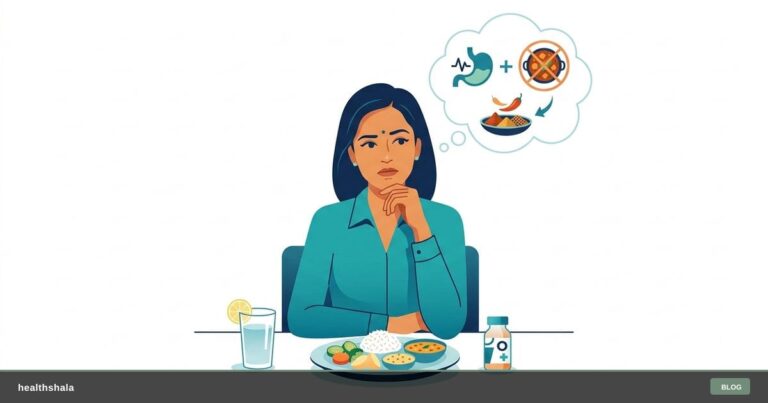
You eat a samosa on Mounjaro and spend the next four hours feeling like you swallowed a brick. That’s the obvious part. What nobody tells you: junk food on tirzepatide doesn’t just trigger nausea. It silently accelerates muscle loss because when you’re already eating 800 calories a day and half of that is a paratha, there’s zero room left for protein. The weight comes off brutally fast. The muscle goes with it.
Eating junk food on Mounjaro triggers immediate gastrointestinal distress. severe nausea, reflux, bloating, and potential vomiting within 30-90 minutes. The deeper crisis: high-fat, low-protein junk food displaces muscle-protective nutrition during rapid weight loss, accelerating lean mass depletion when your daily food intake is already suppressed to 600-900 calories. You lose weight either way. Junk food just ensures you’re losing the wrong kind.
Most articles about Mounjaro and food focus on digestive comfort. They’re not wrong. Fried foods, high-sugar items, and ultra-processed meals worsen side effects because tirzepatide slows gastric emptying. But comfort is the surface problem.
The real damage happens when junk food becomes your primary calorie source during the most muscle-vulnerable phase of your life.
The Immediate Physical Response: Why Junk Food Feels Worse on Mounjaro
Mounjaro slows how fast food leaves your stomach.
Normally, your stomach empties in 2-3 hours. On tirzepatide, that stretches to 5-7 hours. High-fat foods sit even longer because fat takes the longest to digest. A plate of pani puri or McDonald’s fries isn’t just uncomfortable. It’s physically trapped in your upper GI tract, triggering waves of nausea that can last until bedtime.
Users on r/Mounjaro consistently report that fried foods. pakoras, French fries, samosas. are the worst offenders. One bite feels fine. Three bites later, the nausea hits like a wall. The common thread: high fat, low fiber, zero protein density.
The physical symptoms stack quickly:
- Severe reflux and heartburn within 30-60 minutes
- Bloating and abdominal fullness that feels like overeating even from small portions
- Nausea severe enough to prevent eating anything else for 6-8 hours
- Vomiting in extreme cases, particularly with ultra-greasy or sugary foods
These aren’t just uncomfortable side effects. They’re your body rejecting food it can’t efficiently process while operating in a metabolic slow-motion state.
What Happens Inside Your Digestive System
Tirzepatide mimics GLP-1 and GIP hormones that naturally regulate blood sugar and appetite. But these hormones also control gastric motility. When you eat high-fat junk food on Mounjaro, your stomach muscles contract more slowly. Food sits longer. Acid production continues. Result: reflux, nausea, and that specific feeling of food “stuck” in your chest.
Sugar makes it worse. Refined carbohydrates spike blood glucose, which Mounjaro is actively trying to control. Your body responds by dumping more insulin, creating a blood sugar roller coaster that amplifies fatigue and crashes.
If you’ve ever felt shaky, exhausted, and nauseous two hours after eating a chocolate bar on Mounjaro, this is why.
The Hidden Crisis: Junk Food Accelerates Muscle Loss During Rapid Weight Loss
Here’s what the GoodRx articles and Reddit threads miss entirely.
You’re on Mounjaro. Your appetite is crushed. You’re eating maybe 700-900 calories a day. Every single calorie now carries massive metabolic responsibility. If half those calories come from a vada pav or a bag of chips, you’ve just used your entire day’s eating capacity on food with near-zero protein and minimal micronutrients.
Muscle requires protein to maintain during weight loss. The general recommendation is 1.2-1.6g per kg of body weight when losing fat aggressively. For a 75kg person, that’s 90-120g of protein daily. On Mounjaro, when you’re nauseous and can barely eat, hitting even 60g feels impossible.
When your daily intake is 800 calories and 400 of those come from biscuits or fried snacks, there’s no mathematical way to protect muscle. You’re not just losing fat. You’re cannibalising lean tissue because your body has no protein substrate to work with.
Indian bodies already start with lower muscle mass compared to Western populations. Vegetarians face additional protein bioavailability challenges. Add Mounjaro’s appetite suppression, and you’re in a perfect storm for lean mass depletion.
The scale drops fast. You feel victorious. But if you’re eating mostly processed carbs and sugar, you’re likely losing 40-50% muscle along with fat instead of the 20-25% that’s typical with adequate protein intake.
Why Protein Density Matters More Than Ever
On Mounjaro, stomach capacity is limited. Nausea is constant. You might eat 4-5 bites per meal.
Those bites need to be protein-dense to have any chance of protecting muscle. A katori of rajma delivers 12g protein. Three tablespoons of hung curd give you 10g. Two eggs: 14g. These portions are manageable even when nauseous.
Compare that to junk food. Two samosas: 6g protein, 400 calories, 24g fat. A serving of chips: 2g protein, 300 calories. A chocolate bar: 3g protein, 250 calories. The calorie density is high. The protein density is catastrophically low.
When you only have 4 bites before nausea kicks in, using them on low-protein foods is a direct path to muscle loss. The weight comes off either way. Mounjaro guarantees that. But whether you lose fat or muscle depends entirely on what you put in those 4 bites.
Healthshala was built specifically for this moment. translating muscle protection into dal-roti portions you can actually tolerate when every bite feels like a negotiation.
The Long-Term Metabolic Consequence of Junk-Heavy Mounjaro Use
Six months on Mounjaro. You’ve lost 18kg. You look smaller. But your arms have that loose, saggy appearance. You’re exhausted climbing stairs. Your resting metabolic rate has dropped more than expected.
This is what happens when rapid weight loss isn’t supported by adequate protein and strength maintenance.
Muscle is metabolically active tissue. It burns calories at rest. When you lose significant muscle mass during weight loss, your metabolic rate drops disproportionately. You become “skinny fat”. lower weight on the scale, but higher body fat percentage and reduced functional strength.
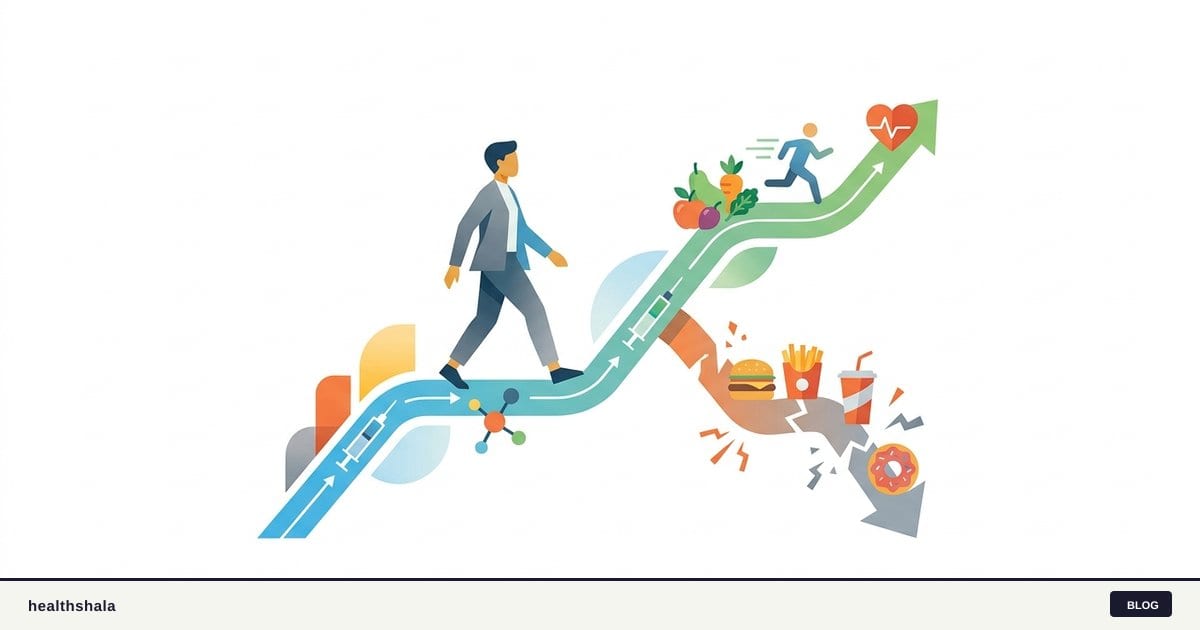
The junk food pattern creates a vicious cycle:
- Nausea from junk food prevents eating protein-rich meals for hours afterward
- Low protein intake accelerates muscle catabolism during rapid fat loss
- Reduced muscle mass lowers metabolic rate, making weight maintenance harder post-Mounjaro
- Energy crashes from blood sugar spikes reduce physical activity and strength training adherence
You end up lighter but weaker. The weight loss is real. The body composition outcome is devastating.
What Studies Show About Muscle Loss on GLP-1 Medications
Research on tirzepatide and appetite regulation confirms what users experience: food cravings are significantly suppressed, but this suppression doesn’t differentiate between junk food and nutrient-dense options. Your brain just wants less food overall.
The medication works by reducing hunger. It doesn’t automatically steer you toward better food choices. If junk food is convenient and familiar, you’ll eat less of it. but it’ll still be junk. And when total intake is sub-1000 calories daily, “eating less junk” still means inadequate protein for muscle preservation.
Clinical trials show average lean mass loss of 20-30% during rapid weight loss without structured protein intervention. With poor nutrition, that climbs to 40-50%. For Indian users starting with already-lower muscle mass, this is existentially concerning.
What Actually Works: Bite Strategy for Mounjaro Users
You can’t avoid junk food forever. Life happens. Social situations. Cravings. Bad days.
The goal isn’t perfection. It’s pattern disruption. If junk food becomes your default because it’s the only thing that sounds tolerable when nauseous, you’re in trouble. If junk food is an occasional deviation in a protein-first eating pattern, you’ll be fine.
Here’s the tactical approach when appetite is crushed:
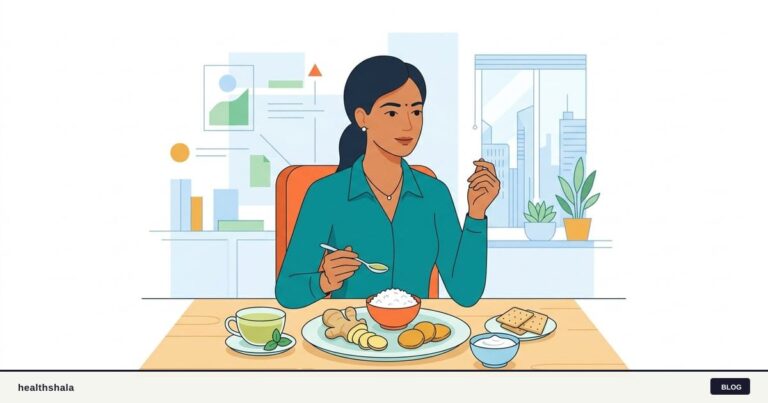
Morning window (9-11am): Prioritise protein before nausea peaks. Three tablespoons hung curd with jeera. One boiled egg. Two tablespoons moong dal. Get 15-20g protein while you still can.
Afternoon window (2-4pm): If nausea is manageable, another protein hit. Small katori rajma. Paneer bhurji (2 tablespoons). Dahi with cucumber. Another 12-15g.
Evening window (7-9pm): Smallest protein dose. Even 8-10g counts. One egg. Small bowl dal. Hung curd raita.
This gives you 35-45g protein across three micro-meals. It’s not optimal. But it’s survivable for muscle protection. Now, if you want a samosa or biscuits, have them after protein is secured. Use junk food as filler, not foundation.
The Indian vegetarian trap is thinking “I had rajma today” counts as high protein. One small katori rajma is 8-10g protein. You need that three times a day just to hit baseline. Track in actual portions. not feelings. Healthshala Blog covers specific portion tracking strategies for this exact scenario.
When Junk Food Is the Only Option
Sometimes you’re traveling. Sometimes you’re at a function. Sometimes you’re so nauseous that the thought of dal makes you want to vomit, but biscuits sound tolerable.
Harm reduction strategy:
- Choose baked over fried (baked samosa, khakhra over chips)
- Pair with protein if possible (biscuits with milk, chips with paneer cubes)
- Eat slowly to minimize GI distress. one piece every 10 minutes
- Plan protein recovery meal 4-6 hours later when nausea subsides
One junk meal won’t destroy your progress. A pattern of junk meals because you’re too nauseous to strategize will.
Track Muscle-Safe Eating on Mounjaro
Get protein goals in actual Indian portions. katoris, not grams. built for GLP-1 nausea windows.
Frequently Asked Questions
Can I eat junk food occasionally on Mounjaro without ruining my progress?
Yes, if it’s truly occasional and your baseline eating pattern is protein-first. One samosa or plate of pani puri won’t destroy muscle if the rest of your week is structured around dal, paneer, eggs, and curd. The problem is when junk food becomes your default because it’s the only thing that sounds tolerable when nauseous. Track your protein intake in actual portions. if you’re hitting 50-60g daily through Indian foods, occasional junk is manageable.
Why do fried foods feel worse on Mounjaro than other junk foods?
Mounjaro slows gastric emptying, and high-fat foods take longest to digest. Fried items like pakoras, French fries, or samosas sit in your stomach for 5-7 hours, triggering prolonged nausea, reflux, and bloating. Sugar-heavy junk food causes blood sugar spikes and crashes but moves through faster. Fat literally stays trapped in your upper GI tract, which is why users consistently report fried foods as the worst offenders for discomfort.
How much protein do I actually need on Mounjaro to protect muscle?
During rapid weight loss on GLP-1 medications, aim for 1.2-1.6g protein per kg body weight. For a 75kg person, that’s 90-120g daily. difficult when you’re nauseous and eating under 1000 calories. A realistic floor is 60-70g minimum. In Indian portions: one katori rajma (10g), three tablespoons hung curd (10g), two eggs (14g), small bowl dal (8g), and you’re at 42g. You need at least one more protein hit to reach safety threshold. This is why portion-based tracking matters more than generic “eat more protein” advice.
What should I eat immediately after junk food to minimize damage?
Don’t eat immediately after. you’ll worsen nausea. Wait 4-6 hours for the junk food to clear your stomach. Then prioritize a small, protein-dense recovery meal: hung curd with salt and jeera, one boiled egg, or two tablespoons moong dal. The goal is getting protein back into your system without overloading an already-stressed digestive system. Small portions, high protein density, easily digestible. Avoid trying to “make up” for junk food by eating large amounts. that backfires on Mounjaro.
Is it better to eat no food or junk food when nothing else sounds tolerable?
If you’re choosing between zero calories and junk food calories, junk food wins narrowly. but only if you follow it with protein recovery within 6 hours. Complete starvation accelerates muscle catabolism faster than inadequate nutrition. However, the real answer is having nausea-friendly protein options prepped: hung curd stays good for days, boiled eggs are grab-and-go, moong dal reheats in two minutes. The “nothing sounds good except biscuits” moment is a planning failure, not an inevitability. Build a rotation of 3-4 protein sources you can tolerate even when nauseous.
How do I know if I’m losing too much muscle on Mounjaro?
Warning signs: extreme fatigue beyond normal tiredness, difficulty climbing stairs or carrying groceries, clothes fitting strangely (loose in arms/shoulders but still tight in midsection), feeling weak despite weight loss, and noticeably saggy skin particularly in upper arms. If you’re losing more than 2kg per week consistently, muscle loss is almost guaranteed. The scale dropping fast feels like success, but if you’re not tracking protein intake in actual portions and you’re eating mostly carbs and sugar, you’re likely losing 40-50% muscle along with fat. Get a body composition measurement if possible. or simply track: can you do 10 bodyweight squats without feeling shaky? If not, redirect nutrition immediately.