Should I Stop Ozempic Because of Nausea and Muscle Loss? What Indian Users Need to Know
40% of users discontinue GLP-1 medications within the first three months, and nausea plus muscle loss concerns drive most of those decisions. but stopping too early often means you never reach the metabolic benefits that protect muscle long-term.
Don’t stop Ozempic solely because of nausea and muscle loss. both are manageable with specific eating protocols. Nausea typically peaks at weeks 2-4 and diminishes by week 8-12 if you eat small, protein-dense meals in portions your stomach can handle. Muscle loss happens when protein intake drops below 1.2g per kg of body weight during rapid fat loss, not from the medication itself. The real question isn’t whether to stop, but whether you’re eating correctly for the medication to work without sacrificing muscle.
Why Nausea Feels Unbearable (And Why It Usually Passes)
Semaglutide slows gastric emptying by 70%.
Your stomach literally holds food longer. That dal you ate three hours ago is still sitting there, partially digested. When you try to eat again, your body sends violent nausea signals because there’s no physical room.
This peaks during the first month because your dosage is climbing and your body hasn’t adapted to the slower digestion rate. Research on semaglutide side effects shows that nausea affects 20-30% of users in the first month but drops to under 10% by month three.
The Indians who quit in week three never discover that week eight feels completely different.
Your stomach adapts. Gastric accommodation improves. The constant queasy feeling becomes occasional discomfort that you can predict and manage.
But only if you eat differently during the adaptation period.
The Muscle Loss Reality No One Explains Properly
Here’s what actually causes muscle loss on Ozempic: inadequate protein intake during rapid fat loss.
Not the medication. The eating pattern the medication creates.
Studies on semaglutide and sarcopenia found that users who maintained 1.2g protein per kg of body weight lost 85% fat and only 15% muscle during weight loss. Users who dropped below 0.8g protein per kg lost up to 40% muscle mass.
Same medication. Wildly different outcomes.
When appetite crashes and nausea makes eating difficult, most people instinctively eat easier foods. plain rice, khichdi without dal, toast, crackers. These are low-protein, low-resistance foods that slide down easily.
Your body is losing 500-800g per week. It needs to get that mass from somewhere. If you’re eating 40g protein daily when you need 80g, it catabolizes muscle tissue to meet metabolic demands.
This isn’t Ozempic destroying muscle. This is inadequate nutrition during a medication-induced caloric deficit.
The muscle loss you’re experiencing isn’t a side effect requiring you to stop the medication. it’s a nutrition problem requiring you to eat differently while on it.
What Actually Happens When You Stop Mid-Treatment
Your appetite returns within 4-7 days.
The nausea disappears almost immediately because gastric emptying normalizes.
And then, within 8-12 weeks, most users regain 60-80% of the weight they lost.
Data shows that 71% of people who stop GLP-1 medications within the first two years are no longer taking them. and weight regain is the primary long-term outcome.
Here’s the brutal part: if you stopped because of muscle loss concerns, you now face an even worse scenario.
You regain primarily fat mass, not muscle. Your body composition after stopping is often worse than before you started. Lower muscle mass, higher fat percentage, same or higher total weight.
The nausea you fled from becomes the muscle loss you feared, but permanent.
The Indian Food Solution for Nausea Days
Protein-dense, small-volume foods are how you eat through nausea without losing muscle.
Forget the “three balanced meals” advice. Your stomach can’t handle volume right now.
You need foods that deliver 15-20g protein in portions that fit in half a katori. Indian foods designed specifically for Mounjaro nausea focus on this exact strategy.
Here’s what works in the first four weeks:
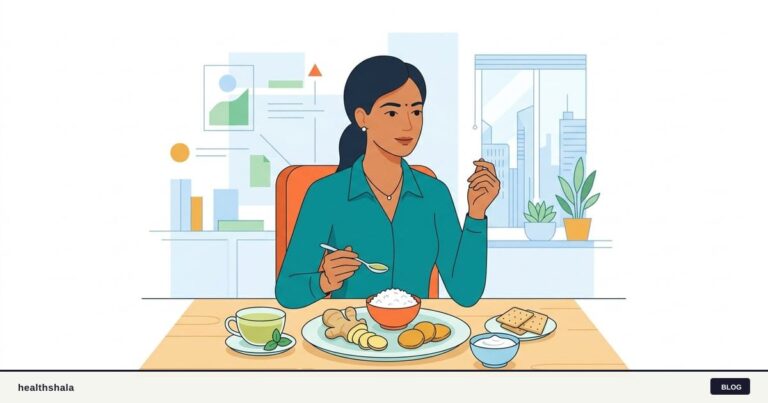
- Hung curd with roasted jeera: 1 cup = 24g protein, minimal volume, no cooking required
- Paneer bhurji (dry, no gravy): 100g = 18g protein, eat it cold if hot food triggers nausea
- Moong dal cheela: 2 small chillas = 16g protein, easier to digest than roti
- Boiled eggs with pink salt: 2 whole eggs = 12g protein, reliable when nothing else stays down
- Masoor dal (thin consistency): 1 katori = 12g protein, easier on slow-emptying stomach than thick dal
Notice the pattern: high protein density, small physical volume, minimal fat and fiber that would slow digestion further.
You’re not trying to eat “normally.” You’re trying to hit 80g protein daily in a stomach that can only handle 60% of its usual capacity.
That requires deliberate food selection that most resources ignore because they’re built for people eating chicken breasts and protein shakes.
The 12-Week Decision Framework
Give the medication 12 weeks before making a stop decision.
Here’s what you should be tracking:
Week 1-4: Survival mode. Nausea is highest. Focus exclusively on getting 80g protein daily through small, dense meals. Don’t worry about balanced nutrition yet. Protein is the only metric that matters for muscle protection.
Week 5-8: Adaptation phase. Nausea should be decreasing noticeably. You should be able to add fiber back in (vegetables, dal with more volume). Start tracking whether you can eat closer to normal portions. If nausea hasn’t improved at all by week 8, that’s a doctor conversation. but most users see 60-70% reduction by this point.
Week 9-12: New normal. This is when you discover what sustainable eating looks like on this medication long-term. Occasional nausea after rich meals, but manageable. Appetite is lower but predictable. You know which foods work and which trigger problems.
If you’re still experiencing daily debilitating nausea at week 12, stopping makes sense.
If you’re losing more than 1kg per week consistently and can’t get protein above 60g daily despite trying the protocols above, stopping makes sense.
But if you stop at week 3 because you had two bad nausea days and read a headline about muscle loss, you’re making a decision on incomplete information.
What Indian Ozempic Users Actually Need Instead of Stopping
Most people considering stopping don’t need to quit the medication.
They need a system that acknowledges their reality: Indian food portions, medication-induced appetite suppression, and muscle protection as the primary goal.
That means tracking in katoris and pieces, not grams and macros. Meal suggestions built for dal-roti eaters who are nauseous, not generic “high-protein breakfast” templates with Greek yogurt and overnight oats.
It means understanding that “1 katori rajma + 2 tbsp paneer bhurji” is a complete answer on a hard nausea day, not a compromise or failure.
Every resource tells you to increase protein. Nobody tells you how to get 80g protein into a stomach that feels full after half a katori.
That translation work. from clinical advice to real food in portions you can actually eat while nauseous. is what prevents the muscle loss that makes people want to stop.
The gap between prescription and sustainable use isn’t information. it’s culturally-specific, medication-aware nutrition guidance that doesn’t exist in standard medical follow-up.
Side effects like lactose intolerance and nausea aren’t reasons to stop if you know which Indian foods work around them.
Healthshala exists specifically for this gap: daily tracking built for Indian GLP-1 users who need to know if their muscle is protected, not just whether they hit a calorie target.
Track Your Muscle Protection in Real Indian Food Portions
Built for Indians on GLP-1s who eat dal, paneer, and roti. not chicken breasts and protein shakes.
Frequently Asked Questions
Is Ozempic safe for 50 year olds experiencing nausea and muscle loss?
Yes, if protein intake stays above 1.2g per kg of body weight. Studies show that age-related muscle loss accelerates only when users fail to maintain adequate protein during rapid weight loss. The medication itself doesn’t cause additional sarcopenia risk in people over 50. inadequate nutrition does. Track protein daily in familiar portions (katoris of dal, pieces of paneer) rather than trying to calculate grams, and prioritize strength-bearing activities like climbing stairs or carrying groceries.
How long does Ozempic nausea last before I should consider stopping?
Peak nausea occurs at weeks 2-4 and typically decreases 60-70% by week 8-12. If you’re still experiencing daily debilitating nausea after 12 weeks despite eating small, protein-dense meals and avoiding high-fat foods, consult your doctor about dose adjustment or discontinuation. Most users who stop before week 8 quit during the temporary peak, not during the long-term steady state. The key indicator: can you consistently eat 60-80g protein daily by week 10? If yes, the nausea is manageable. If no, despite trying nausea-friendly high-protein Indian foods, stopping may be necessary.
What are the signs I’m losing muscle vs. fat on Ozempic?
Muscle loss shows up as weakness in daily activities (struggling with stairs, difficulty carrying groceries, feeling tired after normal tasks) even while the scale drops quickly. Fat loss without muscle loss means you maintain strength, your clothes fit better around the waist and thighs but not necessarily the shoulders and arms, and you’re losing 0.5-0.8kg per week consistently rather than 1-1.5kg. If you’re losing more than 1kg weekly and your protein intake is below 80g daily, you’re likely losing significant muscle mass. The mirror test: if your face looks gaunt but your belly isn’t noticeably smaller, that’s disproportionate muscle loss.
Can I prevent muscle loss while eating only small portions due to nausea?
Yes, by prioritizing protein density over meal volume. Focus on foods that deliver 15-20g protein in half a katori or less: hung curd (24g protein per cup), paneer bhurji without gravy (18g per 100g), moong dal cheela (16g per two small chillas), or boiled eggs (12g per two eggs). Spread these across 4-5 small eating windows throughout the day rather than trying to force three full meals. The goal isn’t to eat normally. it’s to hit 80g protein daily in whatever small portions your stomach can handle. This is exactly why tracking in familiar Indian food portions matters more than generic macro counting.
Will I regain all the weight if I stop Ozempic due to nausea?
Most likely, yes. data shows that 60-80% of lost weight returns within 8-12 weeks of stopping, and users typically regain primarily fat mass, not muscle. This leaves you with worse body composition than before starting: lower muscle mass, higher fat percentage, potentially same total weight. If you stop before the 12-week adaptation period, you’re quitting during the temporary difficult phase and missing the long-term metabolic benefits. The better strategy: manage nausea with eating protocol changes (small, protein-dense meals) and give your body 12 weeks to adapt before deciding to stop.
What should I do if I can’t eat dal or paneer anymore due to Ozempic nausea?
Try preparation changes before eliminating these foods completely. Thick dal with tadka might trigger nausea, but thin masoor dal (watery consistency) often works. Heavy paneer curry causes problems, but cold, dry paneer bhurji without gravy is easier to digest. Side effects like food aversions are often preparation-specific, not ingredient-specific. If all dal becomes intolerable, shift to moong dal cheela, besan chilla, or boiled eggs as primary protein sources. The key is maintaining 80g protein daily through whichever Indian foods your stomach currently tolerates, even if that list is temporarily shorter than normal.